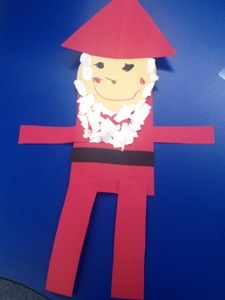
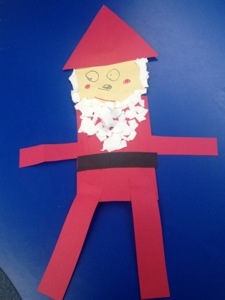
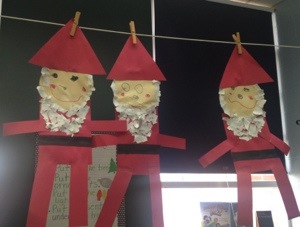
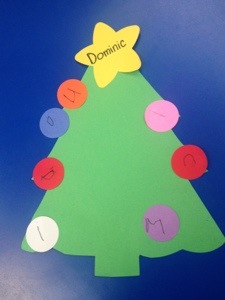
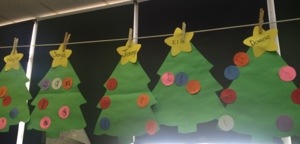
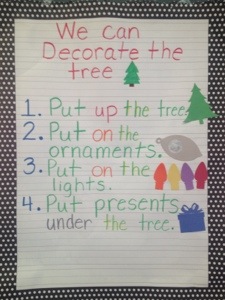
I love this time of year – there is so much fun in learning to be had….from shape Santa’s to Christmas trees with first names written on ornaments-OH What FUN!


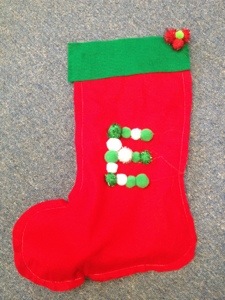




I love this time of year – there is so much fun in learning to be had….from shape Santa’s to Christmas trees with first names written on ornaments-OH What FUN!

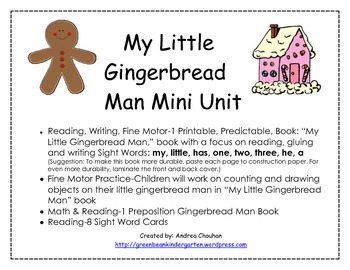
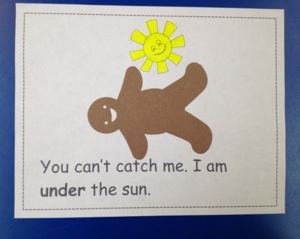
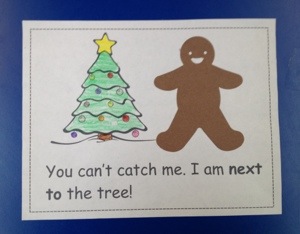
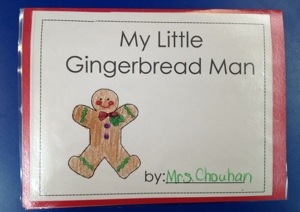
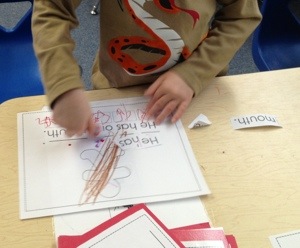
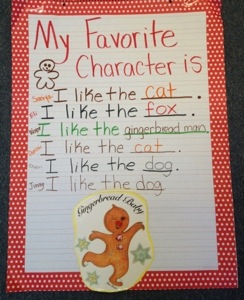
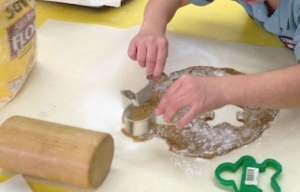
Oh how we love the gingerbread man! We were busy reading, writing and demonstrating prepositions with a take home book. Then, we wrote and read about parts of a gingerbread man. Then, sequencing a cut up sight word sentence. Graphing the first part of the cookie that was eaten first was the next activity. You can download the printables from my TpT “store” here: http://www.teacherspayteachers.com/Product/My-Little-Gingerbread-Man-Mini-Unit-by-greenbeankindergarten-1005374 as a part of a mini-unit
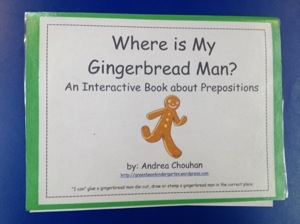
PREPOSITION Book – This is printable and all you need is a gingerbread die-cut for the students to glue and add to the correct place as you are teaching “where” to place him.
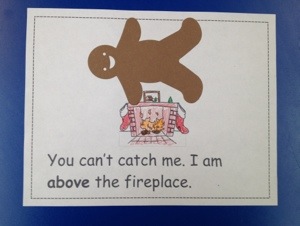
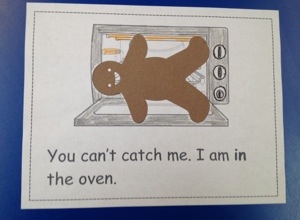
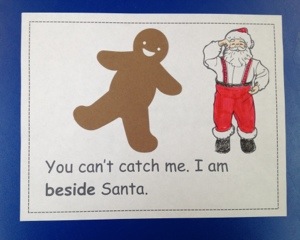
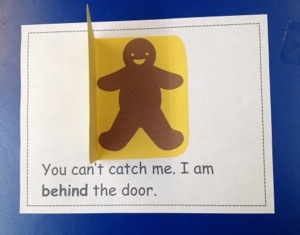
SIGHT WORD Sentence Cut Apart and Writing Book – This is great for reading, writing and fine motor work.
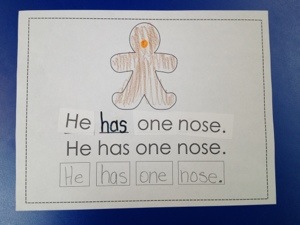
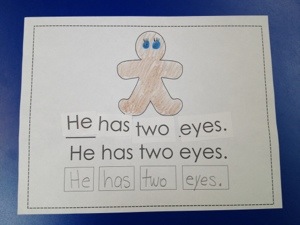
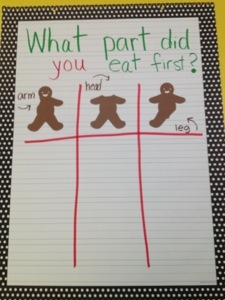
This is the famous “First Bite” Chart that is not my original idea. You simply pass out a gingerbread cookie (I like the Little Debbie brand). Have the children take a bite and ask them which body part they ate first. Then graph it either with their picture, a gingerbread die-cut, or by them writing their own name under the correct section.
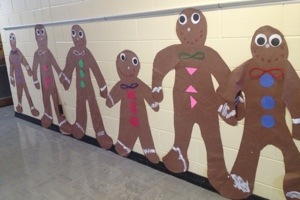
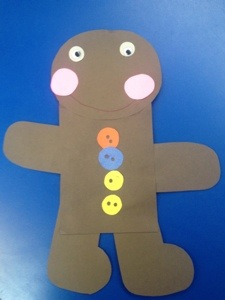
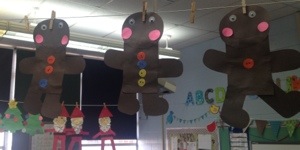
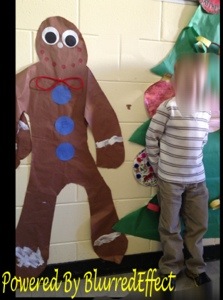
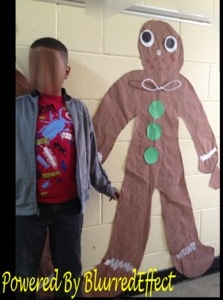
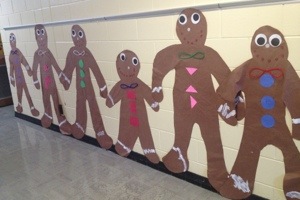
Fun Gingerbread Craft-ivity! My wonderful teacher Assistant created this with our students. She reviewed the body parts and discussed 2 legs, 2 arms, 2 eyes, 1 mouth, 1 stomach and then decided which body parts of the gingerbread man were real shapes (the stomach, the head and the eyes). Next, the children chose and named the color and amount of buttons they wanted. Oh, how we just love how they turned out!
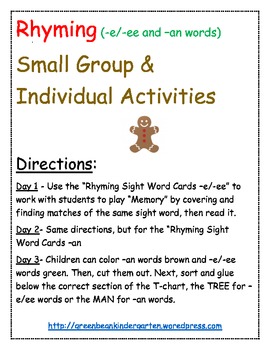
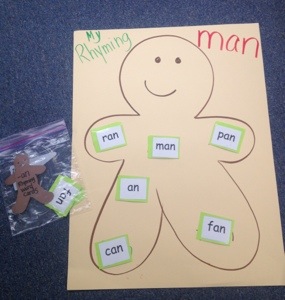
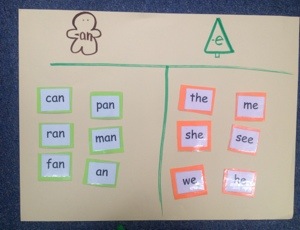
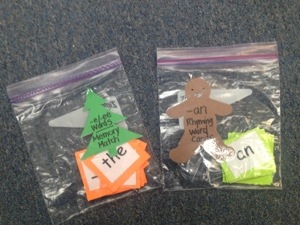
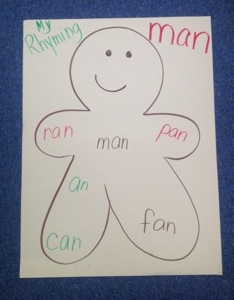
RHYMING MAN – Here is our cute little dude that is helping us learn to rhyme words. This is quite possibly one of the hardest pre-reading skills in kindergarten! Rhyming can also be kind of boring, but our students had a lot of fun rhyming with the gingerbread man. First, I drew him on this chart paper. Then, I passed out only words that DID rhyme with -an and MAN. So, I set them up for success. Any word that they said or read to me WAS a word that rhymed with man. Then, I modeled how to write the word. After the 5-10 minute whole group lesson, this then became a small group lesson. I placed a double set of flashcards for the students to play “Memory,” and find 2 words that were the same and matched together. In another station, I placed the Rhyming man chart and placed a set of the flashcards for the children to match on top of the written word. For the next day, I drew a TREE and we did the exact same lesson, but with words that end in /-e/. On the third day, we sorted /-e/ and /-an/ words. Download the printable and 3-day lesson here: http://www.teacherspayteachers.com/Product/Rhyming-Word-Sort-Simple-Printable-1015046
Cute gingerbread clipart from: http://www.mycutegraphics.com
It came….and went-and we loved it!




![kidsfunreading[1]](https://greenbeankindergarten.org/wp-content/uploads/2013/08/kidsfunreading1.jpg)
A great way to encourage daily reading at home, is to send home a “Little Reader” with your students. These Little Readers are about 5 pages each and contain sight words and word family words. These are the types of books that young children should begin reading with. Sight word and word family instruction should precede, though and then through these books, they will practice reading their recently taught and learned words.
These books will be even more meaningful to them, if you read it with them in a small group, before they take it home. Stick it inside a folder and add a “Reading Log” paper, for their parents to sign (that they listened to their child read). When all three of my children were in Kindergarten (one of them, last year) they all brought home little readers. I was able to help them with a tricky word and they were able to show off their reading skills.
Amongst all of my many projects (writing books, updating and completing the Lesson Plans section, and attending to my own Kindergarten classroom) I am creating and adding “Little Reader” books. They contain two pages on a typical 8 1/2 by 11″ page (the white printer paper size). All you have to do is print if off, cut it in half and staple together. Then, you will have a mini-binded book! Some of my previously made “Little Readers” are within the NEW Lesson Plans page of this website. I will work on moving them to here. But for now, here is the latest hot of the press Little Reader book: “He Ate Hay.”
Little Reader Library
Click on the title below, to print

Little Reader – He Ate Hay (-ay words) Sight Word focus: and, has, to, all, and, he
Little Reader – The iPad (-ad words) Sight Word focus: is, too, had, an, was, and, are
Folder Printables
Labels for Little Reader Folder
Note: “He Ate Hay” images are from either Shutterstock, Google or Bing.
Here are the other books-but they are on standard 8 1/2 x 12 paper (no need to cut-just print and staple). You can follow this link to TpT here:

What is the worst thing that can happen on the first day of school? I am sure you can think of many things! I thought I would have to call a sub, because the weekend before school, I had a high fever and an infection. Well, the worst that could happen was not having to call a sub – it was being admitted to the hospital. Yep, I am the Kindergarten teacher and on my first day of school – I didn’t show up. I sit here writing from my hospital bed, frustrated that I could not control my being sick. How humbling it is! So, I will be back on the third day of school, according to my doctor.

My very yucky IV (I hate blood!) Instead, I was hoping to be at school making a first day of school “hat” with my students!

Breakfast in bed (hospital bed, that is). Had I not been here, I would have been eating my granola bar, while driving to school.

My IV meds. I would have much rather had coffee, to revive me!
My school and principal has been so understanding. But, I can’t help but think that they think that I am trying to skip out on the 1st day of school. That’s the over-achiever in me, I guess. So, if you end up having a bad first day of school, just think, it could be worse – you could be in the hospital (against your will!) I wish everyone else a super first day of school. Please share your first day stories!

As a mom, I have to write about Chore Monster. Each summer, my three children (ages 6, 8 and 10) struggle with being BORED. I struggle with finding things to keep them busy! Now, they do their chores to keep them busy, amazingly! am sure that Chore Monster could also be used in the classroom. It is like a rewards/incentive chart for children to “digitally” keep track of their responsibilities.
My children log in on their ipad’s and I log in on either my lap top or iphone. We use the free version.
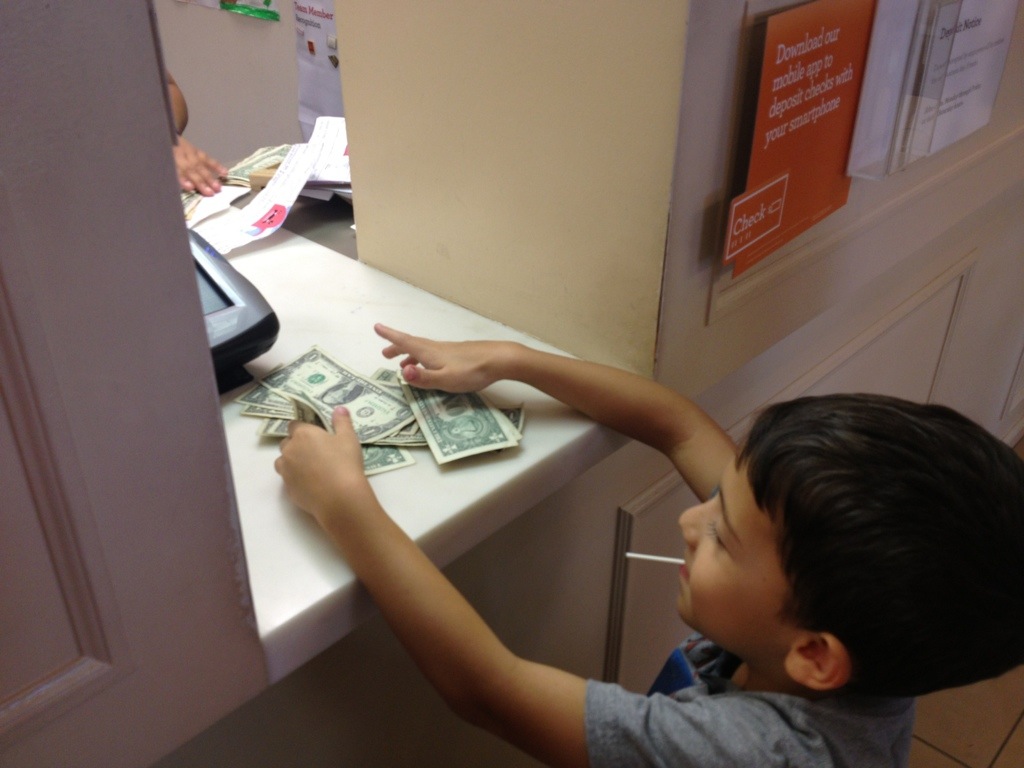
I made them a pay check to reward them (tangibly). I am taking them to the bank, because they chose money as their reward. I want them to get the experience of cashing in their paychecks (which I am giving them once a month).
Here is how it works: You and your child decide which chores to add to their list. You give each chore a point value from 5 to 1000! My 6 year old has his chores as: brush your teeth in the morning and night, make your bed, take dirty clothes to the laundry room and clean your floor. He made about 200 points this month. My 10 year olds chores included: help mom with cooking, fold the clothes and place in correct bedroom, load the dishwasher, sweep the floor, brush your teeth. Not every chore occurs every day, though! Next, the points your child earns can be “cashed in” for rewards. Each reward is worth a certain amount of points (which you decide.) The rewards on their list include: a movie ticket, ice cream, $10.
Check out more information on their website!


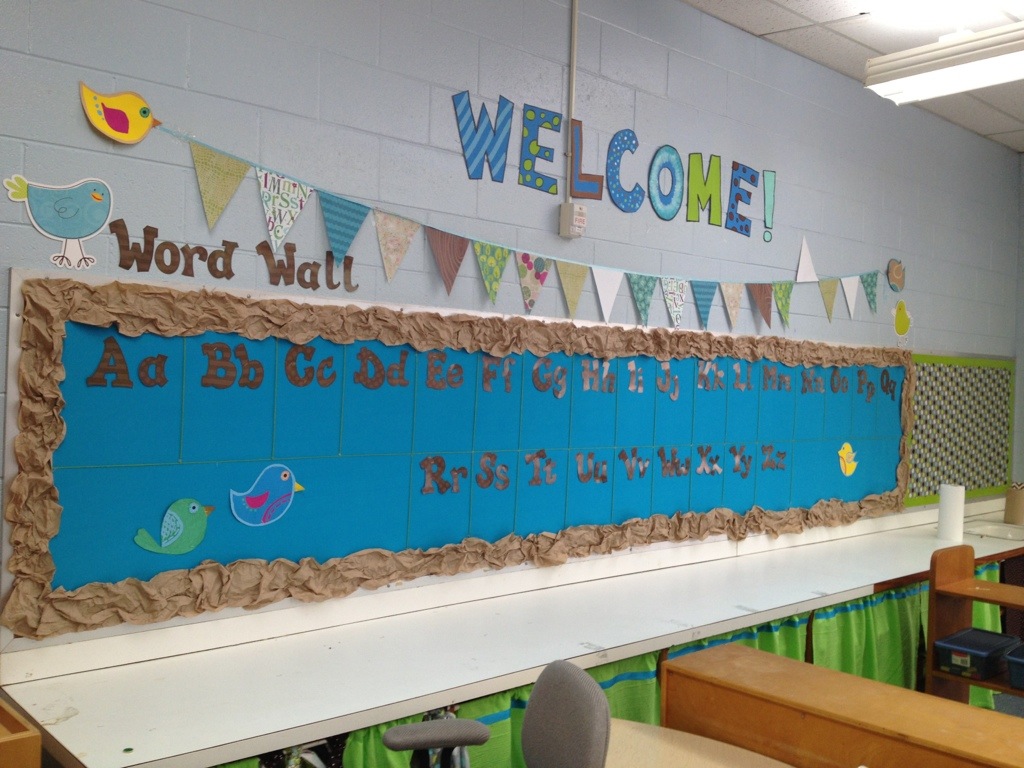
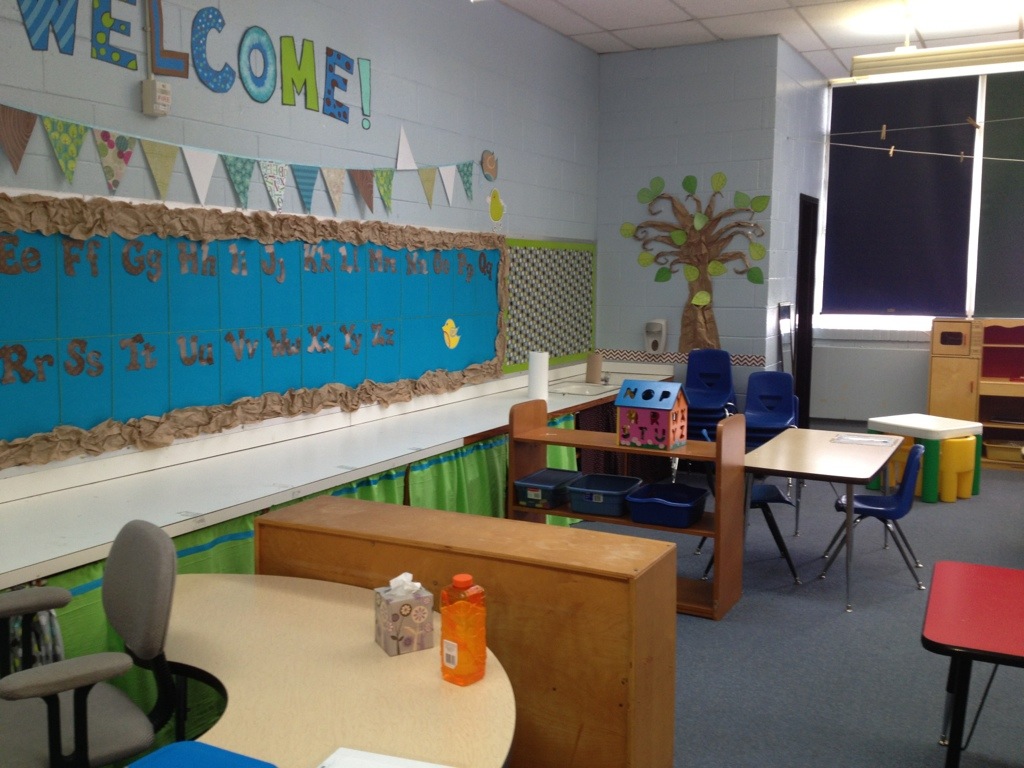
Welcome to the happiest place on Earth….Kindergarten! This is just a simple virtual tour of my mostly, but not all the way, completed classroom. If it makes you feel all warm and cuddly inside-that’s great! My Kindergarten classroom is not the typical 18-24 student classroom. I have the privilege of having 8 wonderful students, who just happen to have special needs and other obstacles. But you know what? These children are little geniuses in the making. I am so looking forward to this school year! I will post more later….but here we go…on with the tour!
In these pictures, is my Word Wall for sight words, Possible Birthday Board, Home-ade un-stiched mini-curtains and more! The blue material is from Wal-Mart. The border is made out of brown paper towel rolls just all scrunched up and stapled on. My pennant banner was made from scrapbook paper from Wal-Mart and then stapled onto thin ribbon (also from Wal-Mart). The WELCOME sign above the bulletin board was hand-painted by me. I’m so proud of it because I am not exactly an artist. I just hand wrote out the letters on blue poster board and then used acrylic paint to decorate each one.
I made my swirly tree by ripping up brown grocery bags and twisting them at the ends. I’m not sure what I am going to put on the tree yet. Hmmmm… I still haven’t decided what to do with the polka-dotted smaller bulletin board either. I may put my birthday wall there. We’ll see!
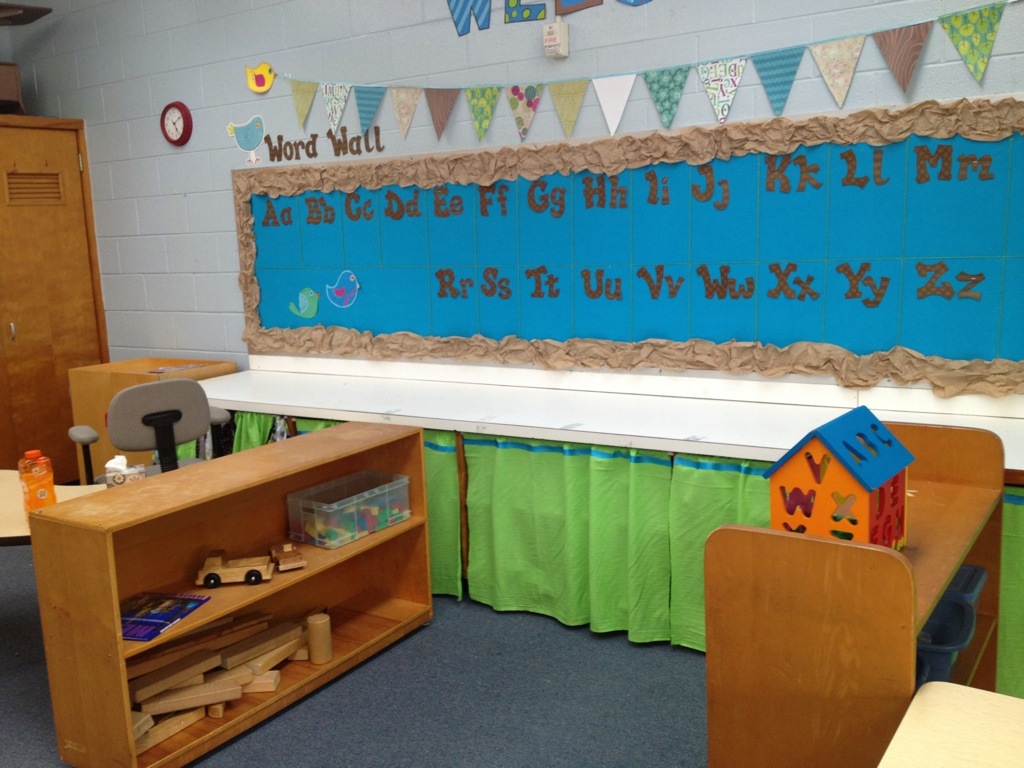 These cute lime green curtains were so cheaply made. I bought those springy type curtain rods and material from Wal-Mart. Then, I stapled the material around the rod. To cover the staples, I used blue ribbon (from Hobby Lobby) and no-stich glue, because I don’t sew. In this picture you will also see the Block Center and to the left of it, a table for 1:1 work with students. The brown ABC Word Wall letters were made by Frog Street Press.
This is my Reading Center. It’s still in the making.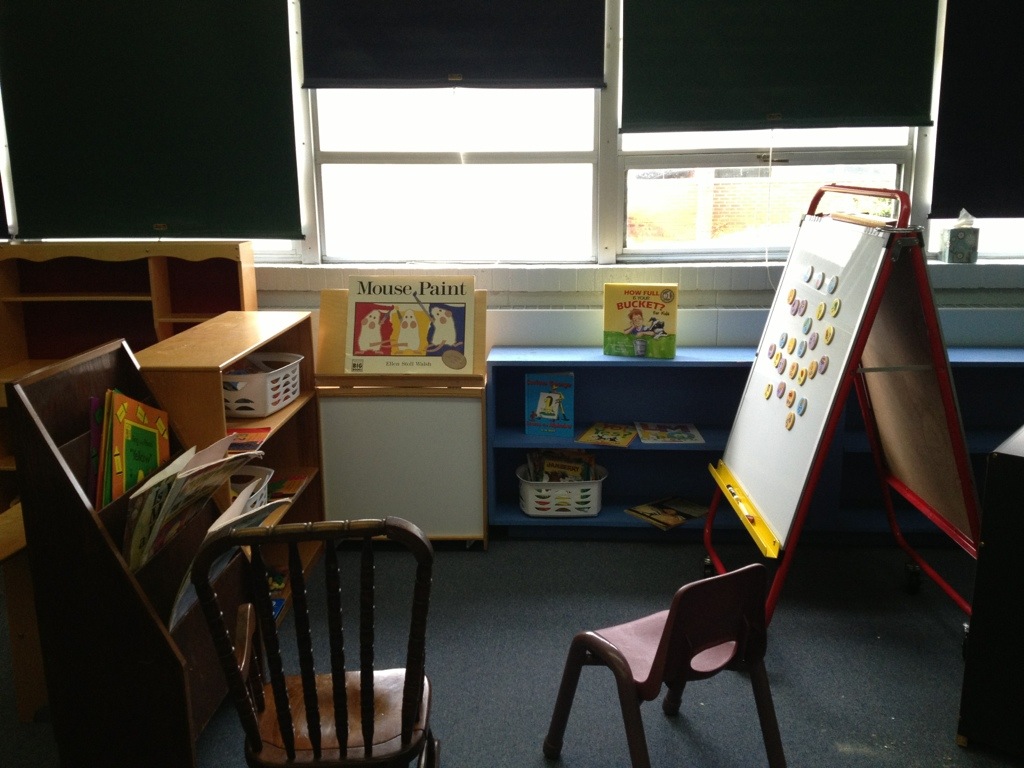
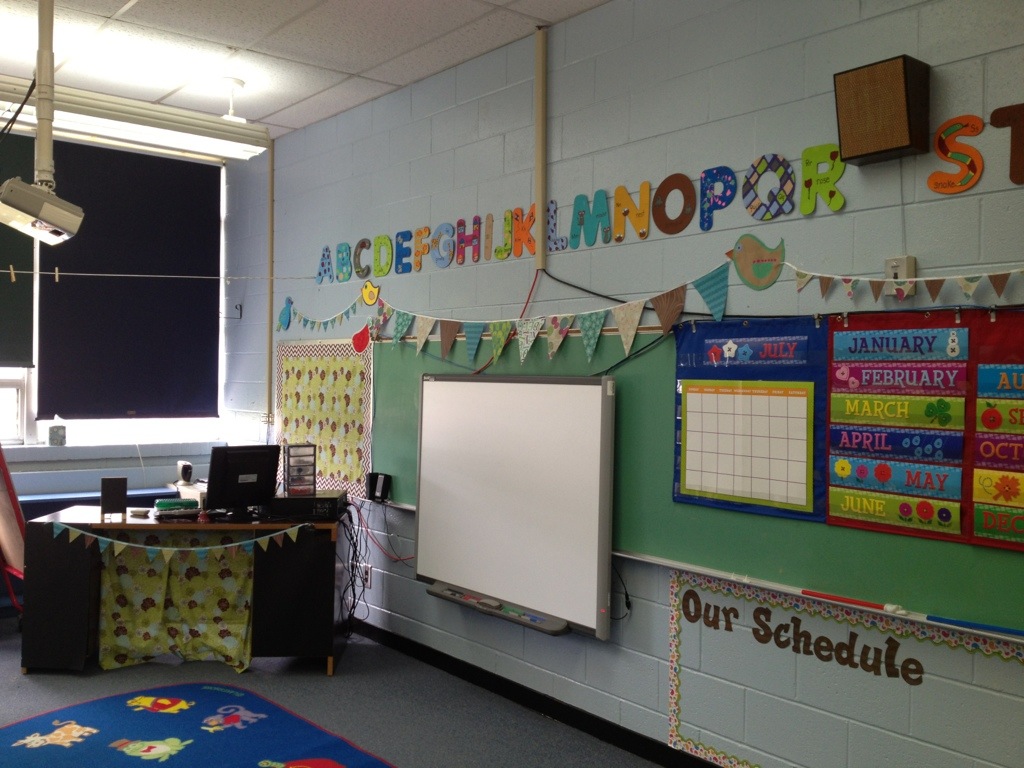
Here is my fun desk! The funky flower material is from Hobby Lobby.
I actually hand-painted these capital letters above the Smart Board. The letters are from Lakeshore Learning. It was a fun project. That’s what I did this summer! The calendar, months of the year and shape signs are all from the Dollar Tree. Aren’t they cute?!
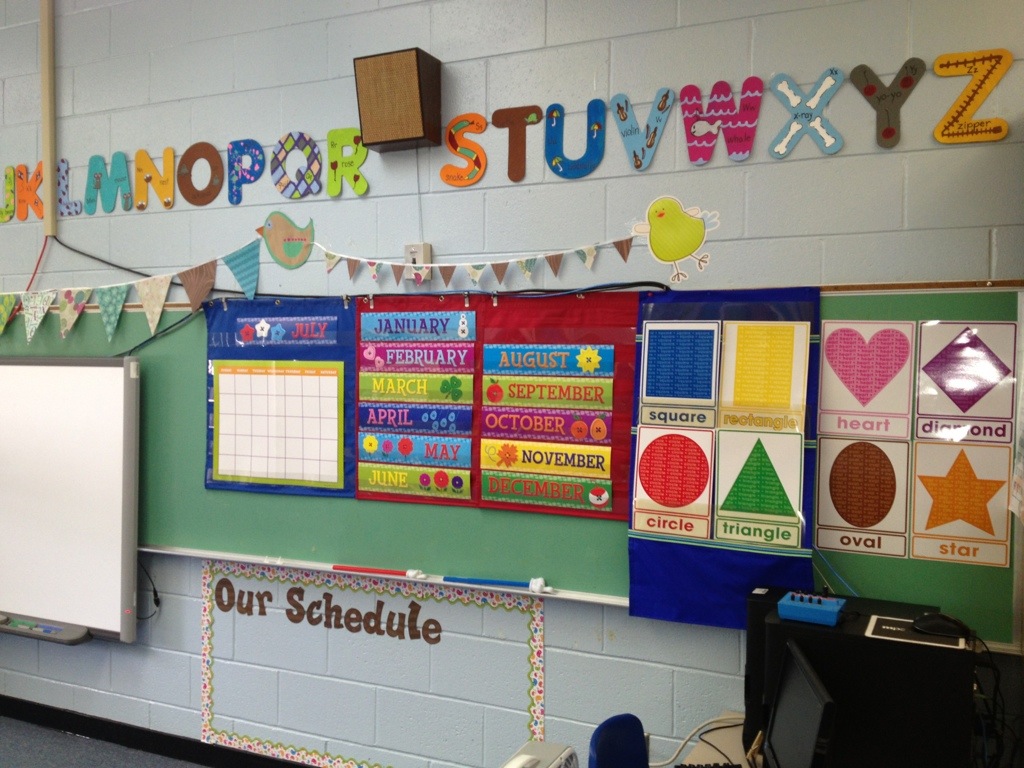
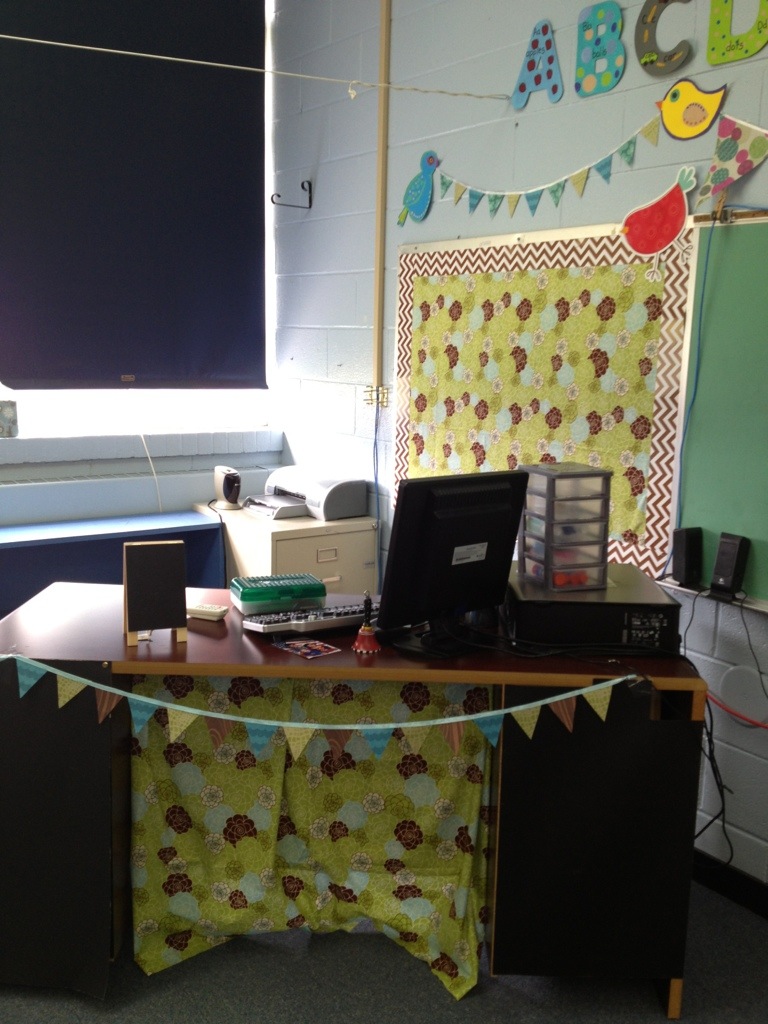
This cute fabric is from Hobby Lobby. I simply taped the material under by desk (you know, since I don’t sew).
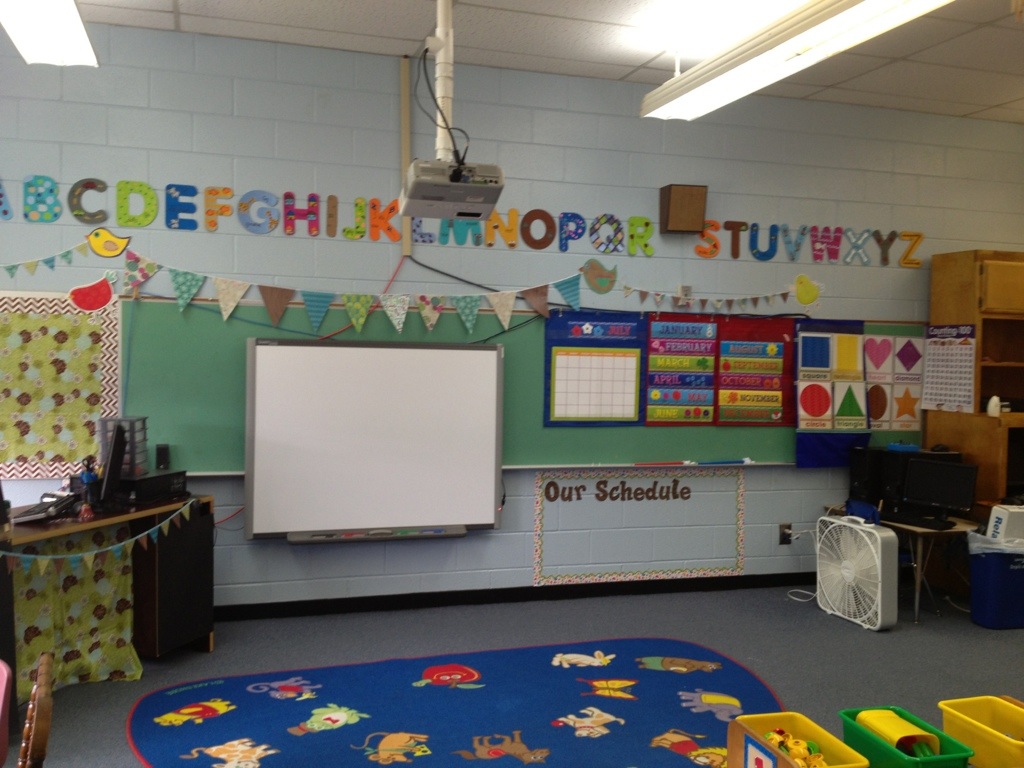 The “Our Schedule” section is at eye-level for the children and I will be putting Board Maker pictures of the schedule there -once I make them!
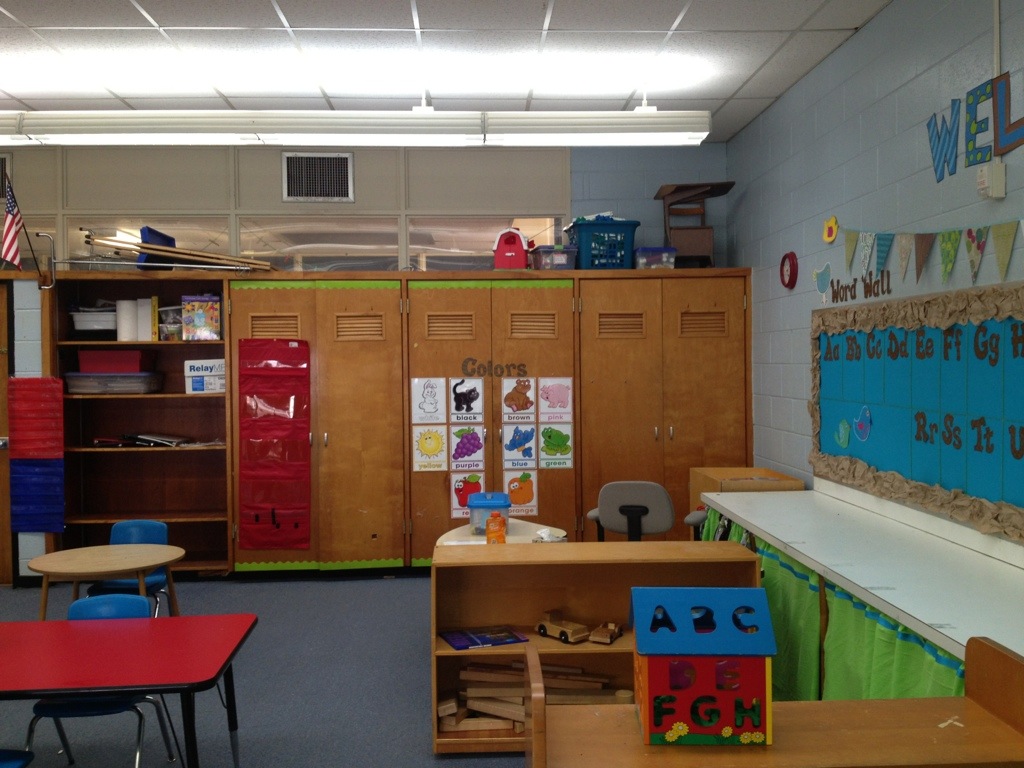
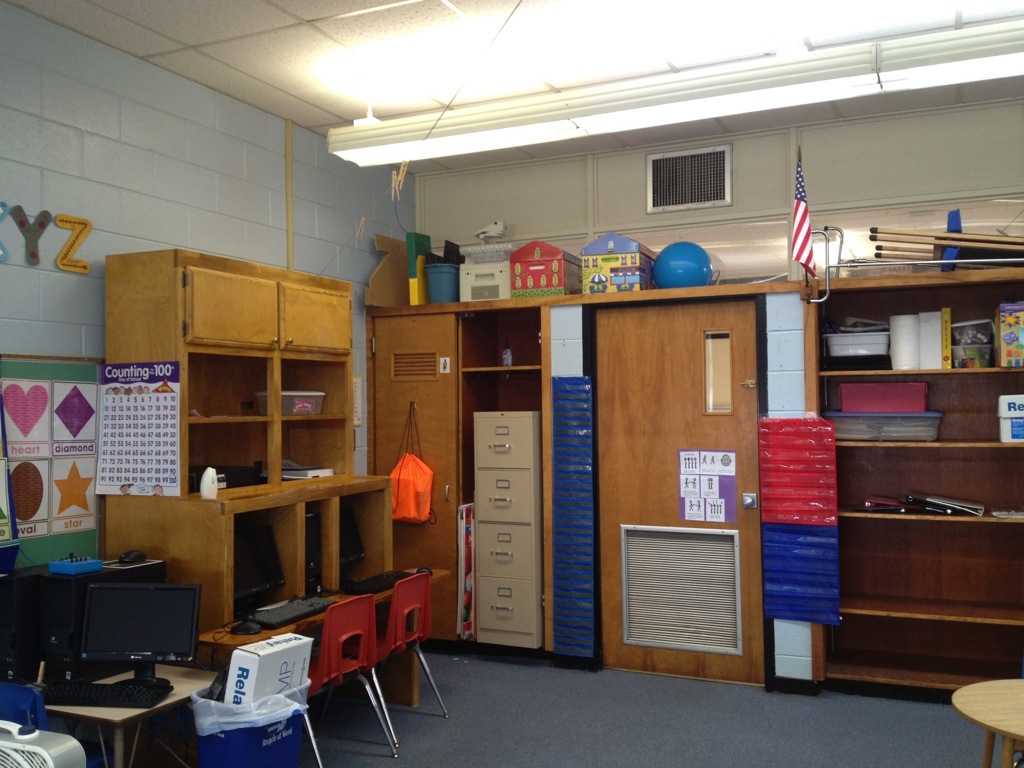
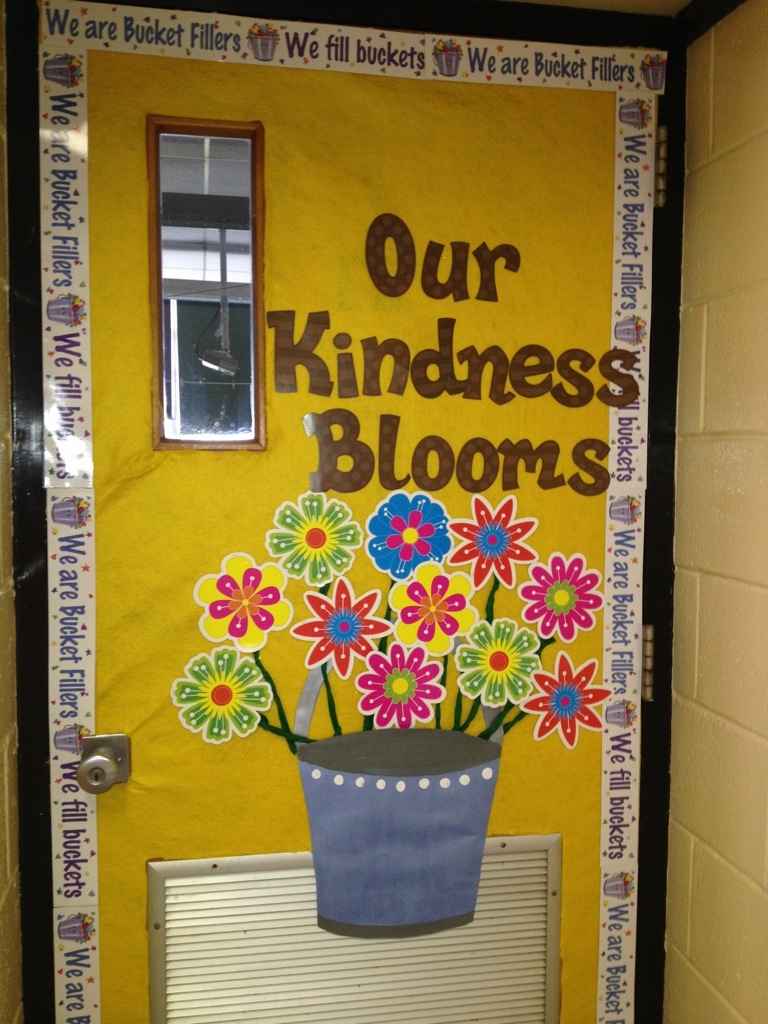
Our School, Thompkins Early Childhood Center in Ozark, Alabama, is a “Bucket Filling School.” I will write more about bucket filling later. It’s great-but I will stay on topic for now.
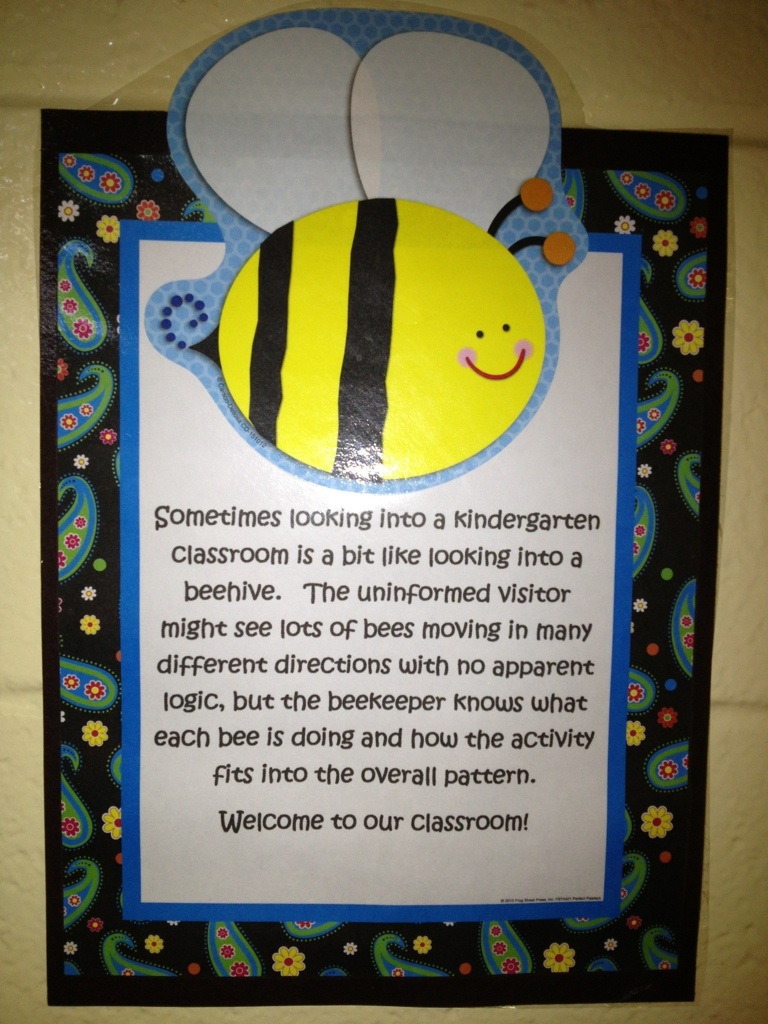
This is the most precious little sign that I have outside of my classroom door. All of the classrooms have this sign. I think it’s a great reminder for everyone who enter! I hope you enjoyed this mini-tour!
by: Andrea M. Chouhan, M.Ed

I recently read an article that labeled autism as a “problem in schools.” At first I was a bit shocked, but as I continued reading, I understood the reasoning behind that label. Many schools lack the appropriate funding to give children with autism an appropriate education. Materials used in a special education classroom differ in many ways and of course, they are costly. For example, many children with autism require a visual daily schedule which can be created using Boardmaker software (which I love, by the way!) The basic software costs $399, though…but it is well worth it.
Many years ago, in America, there were special schools for children requiring special education. Children were turned away from attending a “regular school. Children with autism may have been mislabeled as mentally retarded, also. Luckily, we understand autism and other disabilities much better now. America has certainly come a long way as children with special needs now have a lawful right for an appropriate education.
I am proud to work with special needs children! I am proud to be doing so in America. Last year, I worked in Saudi Arabia where many schools are run with privatized funding. Sadly, some schools do not even accept children with autism or lower IQ’s. Many of these schools do not have trained teachers or classrooms for these children. Other schools that I came in contact with, did have Special Education Departments, however, they were at maximum capacity. Many special needs children were turned away. School systems that I have worked with in Texas actually make space, send the child to a nearby campus, or hire more teachers to teach children with special needs. They make it work instead of turning them away.
Did you know that autism affects 1 in 150 children in American? New Jersey is even called a hot spot where 1 in 95 children have autism! These numbers are staggering, I must say! The cost to fund one autistic student can level out at $19,000 a year, which is triple that of a typical child! This includes the cost of Special classrooms, Materials, Speech Therapists, Occupational Therapists, Aides and Transportation (according to the Special Education Expenditure Project). So, when schools do not have ALL of this funding, providing a “free and appropriate” education to autistic children can become a problem.
As a Special Education certified teacher, I encourage parents, leaders and teachers to be the voice of our special children. We have the role to advocate for them, and we should. These children are already part of our society and it is our job to help them learn how to socialize, apply what they learn and contribute to society (from the classroom to the workplace)!
References:
Boardmaker Software link: http://www.mayer-johnson.com/boardmaker-software/?gclid=CNOj7_efgrgCFQdk7AodLWwAfA
Smith, F. (2013) Educators Deal with the Growing Problem of Autism. http://www.edutopia.org/autism-school-special-needs

Twelve years ago as a first year teacher, I responded to an interview question saying that I chose to become a teacher because I wanted to make a difference in the lives of children. Now that sounds so cliche’, however I meant it then and I mean it now. Each school I’ve been at and each student that have been placed in my class, was not by mistake. I truly feel that each and every child is meant to be there for a reason-with one of those reasons being that God meant for our paths to cross. Each of us was meant to teach one another something.
When you teach young children, you see how much they learn and see such growth by the end of the school year. However, many years later, you hope that you did your job and that they are contributing members of society. Just recently I got a very special confirmation of just that!
One of the first students I ever had contacted me on facebook! I was his Third Grade teacher in Texas and he messaged me to see if I was in fact the same person. After telling him that he found the right person, he told me that I was one of the best teachers he had ever had. He was nine years old then and now he is a college student studying Meteorology in Colorado. What an Angel!

I have never taught about global warming in my kindergarten class. Have you? I have not even talked to my own children about how polar bears and other cute animals are losing their homes as a result of global warming. Perhaps because it is an issue that is new to me. After viewing the following video, I realize that as an educator, it is important to teach children about how our world is actually “melting.” It will be our children and our children’s children who will have to solve these problems. It is our job to prepare them. One way of teaching them about the dangers of the melting Arctic, is through a board game that actually “melts!” A german company created it. This short video clip explains it in a snapshot. Enjoy!

Read More here:
http://meltdown-game.com/
 green bean kindergarten