Author: Andrea Darcy

I am a mom of 4 young adults and have been teaching for 24 years. I currently am in my best post yet! Im Teaching 1st grade at a private Christian school and love it!!!! Over the past 20+ years, I have taught grades PK, K, 1, 2, 3, 4 and 5. In each grade I have also taught Special education, written IEP's, modified and accommodated lesson plans and activities and have also Co-Taught. When I began teaching Pre-K and then Kindergarten, is also when I was in the process of earning my Masters Degree in Education. As a result, I combined my love for teaching, learning and writing into my "2nd and 3rd jobs" which are: Writing curriculum and writing for my handful of websites!!! (green bean kindergarten, elementary elephant)! I hope you find something here that will be useful to you and your classroom! Happy teaching! -Andrea

My Top 10 Most Favorite Children’s Books

We all have our favorite books. Here are mine! The reason that I love them…because my students and my own children love them. Reading and books somehow open the imagination and funny bone!

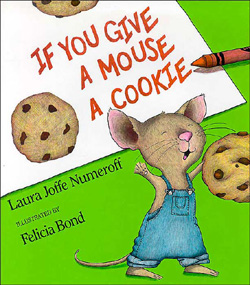
1. “If You Give a Mouse a Cookie” by Felicia Bond is a well loved children’s book by many teachers. Why? It is a story that goes around and around and it shows what happens when you do something-anything! The little mouse is also reminded of his family in this story. This is a great story to read with your child as you enjoy some family time!


2. “Go Dog, Go” by PD Eastman. – This is one of the first books that my Pre-K son learned to read and loved to read at bedtime. It has many 3-letter words and lots of rhyme, which makes it fun to read!


3. Skippy Jon Jones by Judy Schachner is such a funny book. When, I read it, I change my voice into a Mexican accent. The kids laugh and end up reading along with me!


4. “Rainbow Fish” by Marcus Pfister – This book teacher such simple and important concepts – sharing, social skills and making friends.


5. “Jake Starts School” by Michael Wright – This book shows a silly kid who insists that his parents stay at school with him all day. It helps children become more at ease with school as they watch the mom and dad on the playground and in the kiddie chairs!


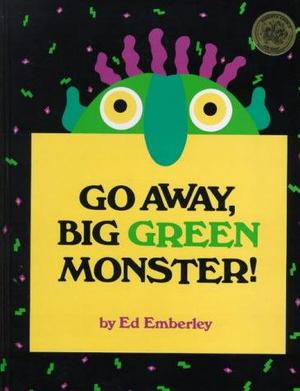
6. “Go Away Big Green Monster” by Ed Emberly – This book “tricks” children into reading along. Its also a great book to read before nap or bedtime. I love how it is a simple story line that emphasizes color words and facial features, as well.


7. “Bad Kitty” by Nick Bruel is such a funny book about a really bad cat that constantly is getting into trouble!


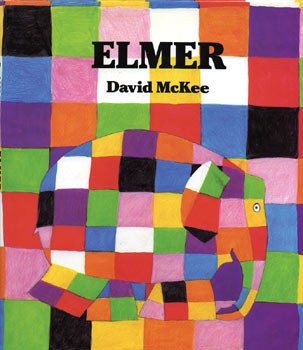
8. “Elmer” by David McKee teaches about uniqueness and how everyone is special.


9. “Alice the Fairy” by David Shannon, shows a how little girls imagination can come to life!


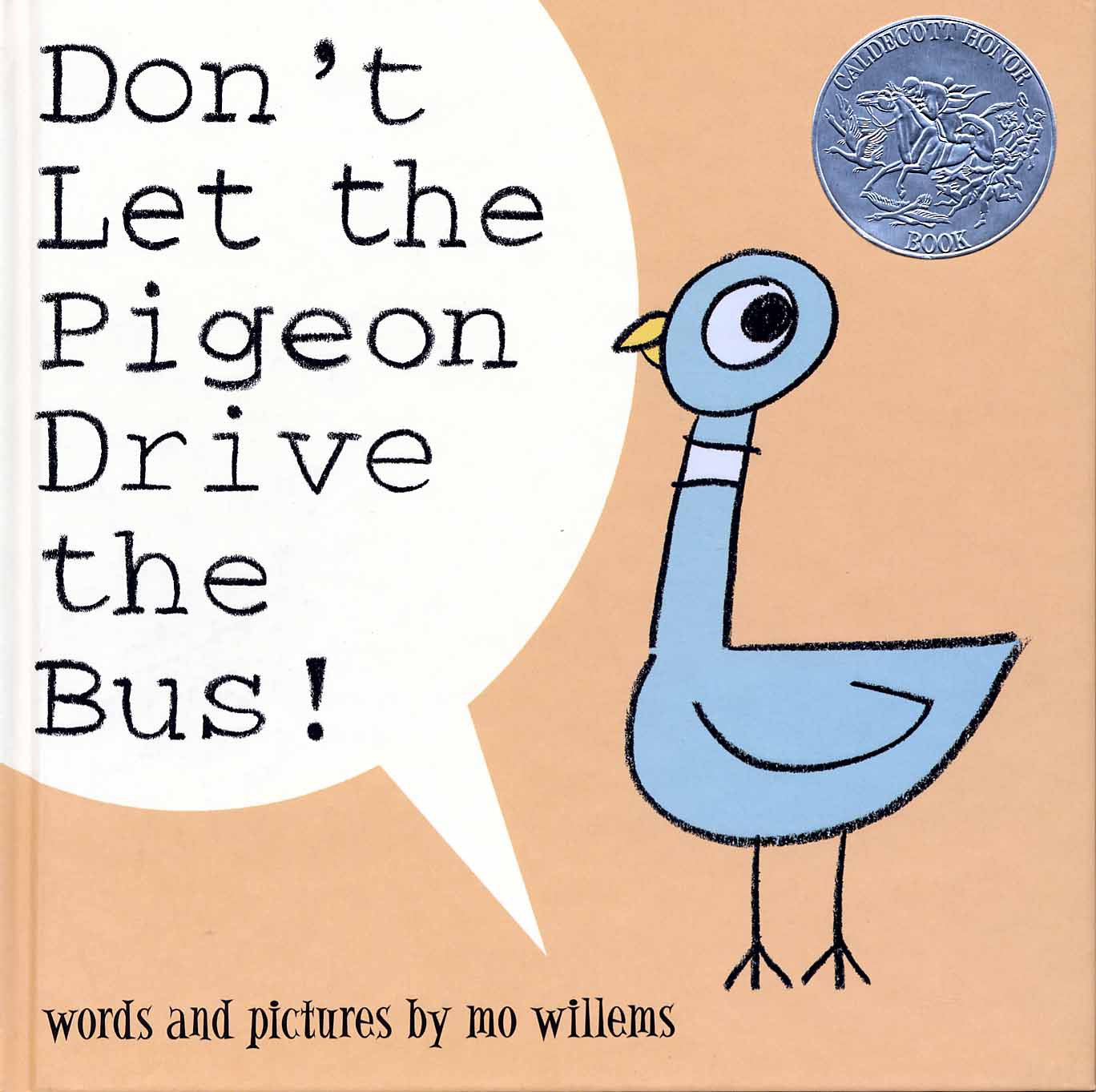
10. “Don’t Let the Pigeon Drive the Bus!” by Mo Willems – A cute little bird sneaks into the driver seat and has so much fun!


There you have it!


Using Colorful Books to Capture a Child’s Curiosity…..A Color of His Own by Leo Leoni

Colorful books capture children’s curiosity! Even adults are led to choose books based on thier cover. Literally-judge a book by its cover! It’s ok-go ahead and choose a book to read based on what you see. I teach my students that when they write and make illustrations, they should keep in mind that someone else will be reading their work. This encourages them to work harder and more carefully, instead of quickly. Did you know that most people’s strongest sense is thier sight? What we see leads us to investigate. Investigations lead to learning. Learning leads to creating and creative thinking leads to new ideas! Isn’t that amazing-a book has the power to open up our imagination and creative thinking! I love books for this reason.

Even fictional characters portray creative thinking. The chameleon in the story, “A Color of His Own” by Leo Leoni lets his curiosity lead him to colorful transformations. After reading this story to your students, have then create their own chameleon.

Download this color matching activity sheet at: http://www.4shared.com/photo/vAvPP_M5/color_of_his_own_leo_lionni.html

Outdoor Play is Important for the Brain!

I am guilty. I let my children play on the iPod and laptop and also watch Disney Channel. Now that our family is in Saudi Arabia, a very private country and private people, we are challenged with “what to do?” In the US, they would ride their bikes, swim and play at the park. Here in the desert, the daily temperature is 100, so going outdoors happens rarely during the day time. So, technology has come to the rescue! Deep down, though, I know that they need to be outside! I investigated how much damage that I am actually doing to them, this summer. This is what I found out…..

“Natural sunlight actually makes people happier! It stimulates the pineal gland, the part of the brain that regulates the “biological clock,” which is vital to a healthy immune system. Playing outdoors, allows children to learn through all 5 senses (sight, sound, taste, touch, smell). Children who spend too much time learning from the tv, computers and video games are using only two senses (hearing and sight), which can seriously affect their perceptual abilities.”

Granted, it is summer time still and school will begin in less than 2 weeks. Schools have playgrounds here, that are covered in sheltering tarps. So, I have no doubt that they will we will get the outdoor experience that our bodies crave. I always hated being outdoors in the US, but now I crave it!

So, now, I must go outside today and have some fun smelling the grass (flowers by our door entry), touching the ground (sand), tasting fresh fruit (dates here in Saudi), seeing the sunset and hearing the birds sing (pigeons). I already know that happiness will  follow!

Until then, I guess I will be a bad parent…just kidding. Some evenings, we do go for a walk at the beach. We enjoy the sunlight as we walk from the parking lot to the mall. Ok, who am I kidding. I have some improvements to do. Any suggestions? -Andrea

Sources:

http://www.earlychildhoodnews.com/earlychildhood/article_view.aspx?ArticleID=275

http://scholar.lib.vt.edu/theses/available/etd-05062011-114155/unrestricted/Parsons_AE_T_2011.pdf

Silly Back to School Snapshots!

My point of this post is to make you laugh, like I did. We are all so serious with getting our kids off to their “back to school” first day of school. Or/and we are tirelessly working in our classrooms. If you find this post not funny, please send me pictures that are funny! Let’s laugh together now!

Yes, Dad’s backpacks do come in all sizes!

Someone does not spell well!

Probably Bad News: Somebody Took The Summer Off

Off To College FAIL

What the what? No Way! These are not on the school supply list – anywhere!

Hopeful Fail

Yep, parents are celebrating…don’t deny it!

Zoodles! A Kid Friendly WebSite Surfing Tool and More!

If you haven’t checked out ZOODLES-you really should. It is a great website and app that I am having trouble explaining how awesome it is! My kids love it. It is free and took just a few minutes to set up my children. By typing in thier birthday, the app/website automatically generates age-specific games, stories and websites for that child. My kids love opening the app and clicking on thier name and picture to direct them to their very own learning site!

I downloaded it on my Kindle Fire, iphone and home PC’s for my own 3 children. It send me a report each week of what they did. It is educational and provides age and kid-friendly websites and YouTube video’s for each of them.

I think it is a great way of keeping track of what a child has been working on. It can also be used in the classroom. Think about those children that are not easily motivated…..well this could be a solution. Zoodles has games, website, and a doodle pad to encourage creativity. Each picture that the child creates, is saved and sent to you on a weekly email report. It’s like a portfolio.

Here is what the weekly report looks like…..

Drawing that the child made….

It even has video mail! You send an email to the person you will allow and then they can send a video message email! How cool is that, right?!!

It is great! I just had to share my excitement with you!

Who’s Your Hero?

Is your all time hero Mother Teresa, Amelia Earhardt, Abraham Lincoln, Princess Diana or Michael Phelps? Perhaps your hero is Mohhamed Ali or Martin Luther King Jr. All of these passionate historical heroes are truly special and brave. According to Encarta, a “hero” is somebody who commits an act of remarkable bravery or who has shown an admirable quality. Whoever your hero is- you more than likely admire him for his character and his actions.

During the London 2012 Olympics this year, heroes have truly emerged. 19-year old Usain Bolt won the gold medal in track and field while showing his flair and pride. He made history as the first man ever to win the sprint double, twice. And of course, Michael Phelps has won the most Olympic medals-ever! What persistence and dedication he has had!

There are many athletes that do not make the headlines, however anyone who tried out for and also made it to the Olympics are role models. Years of training and perseverance led them to compete among the best athletes in the world. They believed in and then chased their own dream. That is inspiring in itself!

One unlikely hero, who inspires me to simply “try it” is Wojad Shaherkani, a woman athlete from Saudi Arabia. She is one of the first woman athletes EVER representing and competing in the Olympics for her country. Prior to the London 2012 Olympics, Saudi Arabia did not permit women to perform in the Olympics. This 16-year old judo competitor, stuck to her Islamic practices. She competed in her head covering, even though judo is a contact sport. The strict dress code did not allow her to wear the traditional Saudi head scarf, so she wore a swim cap instead. Perhaps she was thinking, “I can do it my way, and your way. You won’t stop me.” Her acts were brave and I truly admire that her actions speak volumes. Many people spoke negatively of her athletic participation and still do. Coming from a country where women are denied equal rights, Wojad pressed forward and stood up for Arab women. She wasn’t being an extremist, but a hero, instead!

Age has not stopped certain athletes. The most decorated Olympic Basketball player ever, Teresa Edwards holds the record as both the youngest and the oldest Olympic gold medalist in women’s Basketball. She was 20 at her first Olympics and 36 at her last. I am sure that over the years, she thought to herself, “why stop”?

15-year old Gabrielle Douglass is the first African-American to win the gold medal for gymnastics. She competed against world champions and world record holders. Her poise, focus, and stamina allowed her to perform with a smile. Her many years of training paid off. Do you think she ever felt out of place at the gym? If so, she didn’t let that sway her or steal her confidence.

The Olympics are a great tool and backdrop for teaching our children to be strong and brave. When my children viewed the pole vault, high jump, running and diving events-they were amazed and attentive. They had never before seen someone do such interesting feats. My daughter became a gymnast at home, while watching the competitors. My youngest son was inspired to jump-a lot! I was both surprised and happy to see them enjoy watching the Olympics. Perhaps, it was like a live action video game to them. Most of all, I want them to partake in hard work, display confidence and persist when things seem hard. I thank these athletes for their inspiration!

The Power of Music

Music speaks to you and allows you to speak. Think of the messages that you have heard in music. Love and heartbreak are easily felt within lyrics of slow songs. Songs can can affect your mood. We even can remember jingles, lyrics and tunes from our own childhood. Certain songs bring back memories. We sing when we are happy. We hum in the shower. Young children even hum and sing while “going potty.” Nursery rhymes like “Twinkle, twinkle” always remain on the tip of our tongues!

Why is music so powerful? How can it move us to make decisions? The anwer is in the make-up and math of music. Did you know that some of the first types of recorded music were made using mathematical formula’s? In the 1600’s, Johan Sebastian Bach composed this calming music, also called baroque. For children and adults alike, this 45-60 beats per minute music can regulate heart rate, respiration and brain waves. This type of music relaxes us. It is the music you hear at the start of movies, or in a love scene. When children listen to this type of music, while learning, it activates both sides of the brain! It regulates the heart beat and brain waves and relaxes the child. Music helps in concentration and increases memory and learning by 10%!

On the other hand, Classical music inpires creativity. Mozart and Beethoven composed this 60-80 beats per minutes, classical music. Although it is more upbeat, it stimulates creative thinking. Classical music is an appropriate style to play while students are working on a group project or listening to a story. On tv, it is the music that is played during an important event. It grabs your attention and gets you thinking and wondering.

Most songs contain rhymes. Our brains enjoy rhythm and rhyme! Music also helps us store information in our long-term memory. Amazingly, both music and memory are located in the same area of the brain-the limbic system. When we put words to music and create fun rhymes and songs, then we will most likely remember both the music and words. This research is a breakthrough for educators. Many teachers use song and rhyme to teach many skills. Music can be played during test taking or can be used to transition students from one activity to the next. Certain schools in Taiwan, even use music instead of a school bell, to signal changes between classes. Music is truly powerful and I hope that my ravings will inspire you to use songs and styles in new ways.

Source: (Sprenger, M., 2010).“Brain Based Teaching” ASCD: Alexandria, VA.

Related Articles: “Hear the Word” blog-http://kidculture.wordpress.com/2011/03/22/hear-the-world/

Rumor Has It – Finding the Truth in Online Information

Adele says “rumor has it.” It is so easy to believe “rumors” no matter how good and pure of heart that they may seem. I recently read a beautiful story behind an amazing poem. I read the story on a Facebook group that I am a part of. I was mesermized by the thoughtful words of an inspirational elderly man. A picture was attached to his story and I was curious if the picture was the actual photo of the author. I needed a picture to go along with the story. So, I began researching via Google… I did find his picture, but after hours of research.

Here is the Original Poem

Source: http://www.palletmastersworkshop.com/old2.html and http://www.palletmastersworkshop.com/

Below are versions of the story behind the poem that follows. I directly “cut and pasted” them from the sources listed. Please keep in mind that both story one and two are false.

Story 1 “When an old man died in the geriatric ward of a nursing home in GRASS VALLEY , CA . It was believed that he had nothing left of any value. Later, when the nurses were going through his meager possessions, they found this poem. Its quality and content so impressed the staff that copies were made and distributed to every nurse in the home. One nurse took her copy to Missouri . The old man’s sole bequest to posterity has since appeared in the Christmas edition of the News Magazine of the St. Louis Association for Mental Health. A slide presentation has also been made based on his simple, but eloquent, poem. And this little old man, with nothing left to give to the world, is now the author of this ‘anonymous’ poem winging across the Internet. Remember this poem when you next meet an older person who you might brush aside without looking at the young soul within. We will all, one day, be there, too!” – http://www.facebook.com and more than 10 other websites.

Another website quoted the story a bit differently:

Story 2 “When an old lady died in the geriatric ward of a hospital in England, it appeared she had left nothing of value. The nurse, packing up her possessions, found this poem. The quality so impressed the staff that copies were distributed to all the nurses in the hospital. This poem then later appeared in the Christmas edition of “Beacon House News,” a magazine of the Northern Ireland Mental Health Association. This was the Lady’s bequest for posterity.”” – http://crepusculum60.wordpress.com/crabbit-old-lady/ (I couldn’t find the poem published in any publication from the Beacon House or the Northern Ireland Mental Health Association).

Story 3 A message board user posted: “It’s been around a fairly long time. I worked as a care assistant in many nursing homes and residential homes between 1995 and 2004, and without fail, in every single one, someone would have pinned a copy of this poem on the staff noticeboard.” – http://message.snopes.com/showthread.php?t=13896

Surprisingly, I discovered that the poem (that I thought was written by an elderly man in a nursing home) was actually written by a home-bound disabled man who has authored hundreds of poems. David Griffith is the original author of the widely circulated poem, “Too Soon Old.” I also discovered that the poem (as mentioned in the false background, did not actually appear in the Christmas edition of the St. Louis Association for Mental Health. This magazine does not exist. It is only found in google searches, in places where others have quoted the un-original version of the poem and background behind it. More than ten websites quote this poem as having been published in this non-existent magazine. However, an elderly person in a nursing home may have been found with this poem in his pocket. Perhaps the words of this poem spoke to his heart and how he felt as his years were coming to an end. Perhaps many aged individuals feel this way right now. (Source: http://www.truthorfiction.com/rumors/c/crabby-old-man.htm )

Story 4 -The real story….I found the original authors website, thanks to Dianne’s article @ http://www.dianeatwood.com/catchinghealth/2011/12/is-the-crabby-old-man-depressed/. Mr. Griffith’s website has his countless number of poems published online. They are amazing! He writes about his brother who is mentally ill, and shares insight for Kevin’s pure love for God. David also wrote some humorous poems called “Adam’s Underwear” and “Dr. Seuss Explains Computers.” David is actually a home-bound disabled person. He’s been writing and publishing short stories since 1969-forty three years ago (as of July, 2012). I have emailed him to find out more about him. To be honest, I am not sure if he is still living. His website is dated 2001-2008 and his guestbook is too full to receive more messages.

A link on his page led me to his photo. http://www.faeriekeeper.net/criteria1.htm (you can view it there, as my blog won’t let me post it….it must be copyrighted)

After typing his name in google images, I found a similar picture. At the following website, I found out that he was born in 1941 in Corpus Christi, Texas. If he is in fact still alive, he would be age 71. He was number 10 in a 10 child family. His parents were born late in the 1890s, and they too were from large families. He played high school football then later joined the Marines where he served two tours in Vietnam. After his military service he went to College and become an engineer and then a Southern Baptist Minister. He became homebound after suffering from a series of stress related heart attacks in the late 80s, and then a motorcycle wreck. He was left with spinal injuries and with a mobility impairment in 1991. He also suffers from Multiple Sclerosis. Once fully disabled Dave refused to give-up, but started a writing workshop and came on the internet full time. He is the author of over 600 poems and 100 short, stories, much of his works can be found at http://www.palletmastersworkshop.com where he maintains over 450 pages of his writings in page format. Dave is single, and lives alone with a full-time caregiver in Fort Worth, Texas. He refuses to live the life of a “cripple,” but rather travels, writes and maintains as active a lifestyle as his illnesses and injuries allow. Source: http://www.msmusings.com/archive90/97/GALLERY%2097,%208.htm (published 2007)

So, why did I spend all of this time researching the true story? I simply wanted to prove and follow several points. First, don’t believe everything you read on the internet. Second, think of how others feel-no matter how young or old they may be. Actively listen and help them in some way-don’t feel sorry for them. Next, research stories and find out the real meaning and history behind them. Also, enjoy poetry! Finally, learn about the stories behind your favorite poems and authors-it might make the poem come to life and become more personal. Last but not least, don’t quote a poem, statement or article without first reading the actual article and/or source.

Too Much Technology?

By: Andrea Chouhan

The TV is no longer the only form of technological entertainment-for kids and adults! When my first child was a baby, I stimulated his mind with classical music while he watched a Baby Einstein DVD. As he smiled at the moving toys and watched the cause and effect relationships of each, he giggled and was very focused. By the time I had my second child, I could not watch and listen to it anymore. I loved the music, but the repetitive moving plastic toys, started to irritate me (and I was even multi-tasking!)

The iPod came on to the market in 2007-the birth year of my third child. By age 2 he somehow got hold of it and he was satisfied during fussy spells. I found that this device could be used as a quick babysitter while I did my grocery shopping! Soon, my then 4 and 6 year old children became interested in playing on the iPod too! I helped them each find so many free apps that were a mix of games and educational fun. We began reading and listening to bedtime stories on it. This was by far, a cooler toy than the Atari that I played when I was a child!

However, I did witness some negative effects from too much iPod use. Just like with any toy, when I needed to take away the iPod (because I needed to use it) my children would have tantrums. I finally had to put my foot down and use the microwave timer to allow each child to play for 10 minutes at a time. They learned this routine well and the tantrums became non-existent. Too much of a good thing can definitely become a bad thing. In fact, in 2001, the American Academy of Pediatrics recommended no screen time for children under age 2. I am sure some parents have already introduced their babies to the ipod, as I did, however no research proves that ipod use is damaging. Some studies do warn that attention and behavior problems could result, though. However, too much of anything can be damaging, right? Too much computer, TV, alcohol, video games, ice cream, shopping can be detrimental.

We must be careful to ensure that a child is not engrossed in using any device for long periods of time. Adults must rely on their intuition and anecdotal evidence to guide their decision making about when and how much technology their children interact with. It is our responsibility to teach children (and ourselves) the appropriate and inappropriate uses of such new novelties.

Technology can make the lives of children better, as Warren Buckleitner proclaims. The NAEYC also asserts that “we now have the tools we need to start improving the quality of childhood.” What research does tell us, is that “the brain is changing in response to the changes brought about by the high tech information age in which we live” (2010). Did you know that our brain has cravings? Sprenger’s research reveals that the brain craves novelty, excitement and innovation (2010). Technology such as: iPods, iPads, video games and interactive white boards offer children (and many adults) this type of stimulation.

Sources:

(Furman, E., 2012). “Coolest Tech Toys of 2012” http://blogs.babycenter.com/products_and_prizes/coolest-tech-toys-of-2012/

(Ghazi Aska, J., 2012) “Toddler and touch screens: pros and cons for parents to consider” Deseret News-Online Magazine

(Buckleitner, W., 2000) “A Day in the Life of a Kid in 2020” Children’s Software Review, January/February.

(Sprenger, M., 2010) Brain-Based Teaching in the Digital Age. ASDC: Alexandria, VA.

“Tech Toys for Kiddies” http://www.parentingclan.com/entry/tech-toys-for-the-kiddies/

images from google

The Need for National Standards

How does the American Curriculum measure up to countries teaching with a National curriculum? I will briefly explore some positive effects of having a national curriculum while comparing top performing and low performing countries. The ideas offered here are my opinions based on my research. More detailed data can be found in the sources provided at the end of this article.

I am proud to say that I am an American teacher. However, what to teach and how to teach it, is always a concern for principals and legislators. Teachers have less difficulty knowing what to teach. In the distant past, American students outperformed children from around the world. For many years, American students have rated much lower than other advancing nations. The “No Child Left Behind Act” was created to address this problem. This act allowed each state to develop their own curriculum under certain limited federal regulation. However, it merely caused more problems and confusion in the American education system.

During my career as a teacher in Texas, I have taught Pre-Kindergarten, Kindergarten, Second and Third Grade. I taught Special Needs children, GT students and English Language learners as well. I worked at five different campuses and noticed such vast differences in the methods of delivering the learning standards. The reason being: the state of Texas developed learning standards, objective and benchmarks for each grade level. The school district, the principal, the school and then the teachers respectively decided which of those standards to teach and how to present them. Some schools were more lenient, while others were extremely stressful for both the teacher and students. The one commonality at each school was this: test taking skills and strategies were at the forefront. Schools in Texas are rated, each year, based on the results of the standardized testing system. Principals and teachers work diligently to prepare children for these tests.

In England there is one national curriculum (developed in 1992). They are now an above average scoring country on the TIMSS. The United States scored in the slightly below average level. The US has begun developing Common Core State Standards, which provides standards for each subject and grade level. Not all of the 50 states have adopted such standards. Virginia, Nebraska, Texas, and Alaska are the four states that have chosen to continue using their state, not national standards. Perhaps government leaders feel that their existing standards are sufficient or superior? Other countries, such as Sweden and Australia are in the process of moving towards adopting a national curriculum. On the TIMSS, their students scored slightly below average. These countries desire student success, similar to Singapore and France. Hopefully, their new national curriculums will lead the way.

Dr. McPherson has researched one key element in national curriculums. These schools teach the same subjects and for the same amount of minutes per year. For example, every Kindergarten student will receive the same amount of time learning English in Singapore. Many high performing countries have a national curriculum which proves to be successful in the results of national assessments. Many countries have such a national curriculum and have had it for many years: France, Hungary, Ireland, Italy, Japan, Korea, the Netherlands, New Zealand, Norway, Portugal, Singapore, Spain, Russian Federation and the United Kingdom. In 2003, the highest performing 4th and 8th grade students came from the following countries: Singapore, Japan, Hong Kong, Taipei, England, Russian Federation, Hungary (results on the TIMSS-Trends in International Mathematics and Science Study). The majority of these top performers are from countries with a National Curriculum!

After reviewing the Kindergarten standards, I noticed that the Texas Math standards were much more rigorous. While teaching Kindergarten in Texas, quite often we teachers grumbled about the complexity of the Math skills that we were required to teach. Perhaps Texas wants to push the children to higher levels? Now, the Common Core Standards of the US assert that “more learning time in Kindergarten should be devoted to number than to other topics.” Numbers, shapes, counting, object sorting, addition and subtraction are the main skills that are targeted in the Common Core US Kindergarten Math standards. The British Curriculum in Kindergarten (Key Stage 1) focuses on numbers, shapes, space, addition and subtraction, as well. Under the British and US common standards, all children in Kindergarten will be learning addition and subtraction. However, countries without common guidelines may not even teach addition in Kindergarten. This poses a problem for a child who moves from one state or province to another-or event from one country to another. Thus, revealing the need for common standards. Similarly, a child who is only being taught letter names in Kindergarten in Scotland (another below average country on the TIMSS) will have difficulty when transferring to a Kindergarten in England where his peers are reading words and sentences. When this same child moves along each grade level, he is at risk for reading below age level. He would be missing that foundation of phonics. I was curious about the major differences between the British and US learning standards. As a result, I researched and then compiled the details of the similarities and differences between the Kindergarten Math and Reading Standards. To see these details, click here:

Comparing US Common Core Standards to British National Standards: MATH

Comparing US Common Core Standards to British National Standards: READING

After reviewing the comparisons, I noticed that both have about 50% of the same standards, but the other 50% varies. Some differences in Math are: The British Curriculum teaches: ordering 1 and 2 digit numbers and also rounding 2-digit numbers to the nearest whole number. The US Curriculum only orders 1 digit numbers and does not introduce rounding of numbers, in Kindergarten. On the other hand, the US Curriculum teaches the concept of greater than and less than, while the British does not. The British teaches how to use odd and even numbers whereas the US does not. One might wonder which country has the best curriculum. With each society having its own standards, laws and school systems-the curriculum they choose may already be meeting the needs of their population. On the other hand, it may not. Studies show that students that scored higher on international tests are ones that are part of more advanced countries.

Sources:

(2012) ASDC. “Common Core Adoptions by State” http://www.ascd.org/common-core-state-standards/common-core-state-standards-adoption-map.aspx

(2012). Department for UK Education: http://www.education.gov.uk/schools/teachingandlearning/curriculum/primary/b00199044/mathematics/ks1/ma3

(2012). Common Core State Standards Initiative: http://www.corestandards.org/

(2009) “Choosing Between the British and American Curriculum” Online Magazine: The Essentials Guide: Shanghai, http://www.bisshanghai.com/index.php/debate-american-versus-british-curriculum.html

(2012) “Education in Sweden: Lessons for Life” http://www.sweden.se/eng/Home/Education/Basic-education/Facts/Education-in-Sweden/

(2012, McPherson, Fiona). “Educational Curricula” MemPowered website http://www.memory-key.com/improving/strategies/ children/international-curricula

Author of this article: Andrea Chouhan from https://greenbeankindergarten.wordpress.com

Related articles