Your School Lunch Serves What?

Many schools and countries around the world are finally serving healthy school lunches. However some are not, sadly. I recently came across a blog that was written by a school girl. She has taken pictures of what her school serves for lunch each day. Her blog actually has over 8 million page views! Many posts are from other children around the world that have posted their own pictures from their school cafeteria also! School lunch has become a hot topic and a very important trend. Why? Research asserts that healthy eating results in a better learning environment. We have all heard that “healthy minds equals healthy bodies.” Well, it is true!

So, stop by Martha’s blog and compare your school lunch to hers! http://neverseconds.blogspot.com

She even has a book for sale! Wow! What an amazing young girl!

What Research Says About Healthy Eating:

* The brain is powered by energy that comes from broken down food.

* Food influences mood.

* Eating breakfast refuels your body and prepares it for the day.

*”Another study, published in 2005 by theAmerican Society for Nutrition, found that higher intakes of PUFAs (polyunsaturated fatty acids found in fish and vegetable oils) may contribute to improved academic performance while increased ingestion of cholesterol was linked to poorer performance.” -courtesy of: greatschools

* Additives in food (like dyes and preservatives) may increase hyperactivity in children

* Eating fast food more than 3 times a week, can decrease your test scores!

References:

http://www.amazon.co.uk/neverseconds-Incredible-Story-Martha-Payne/dp/1908885165/ref=sr_1_1?ie=UTF8&qid=1348850962&sr=8-1

http://www.independent.co.uk/voices/comment/national-school-meals-week-my-daughter-martha-payne-showed-that-if-you-feed-children-well-at-school-they-perform-better-in-class-8277500.html

http://www.bbc.co.uk/schools/studentlife/revisionandskills/stressandhealth/eat_your_way_to_exam_success.shtml

http://www.greatschools.org/parenting/health-nutrition/2066-how-food-affects-kids-brains.gs

Related articles:

Kindergarten Common Core Lesson Plans 2014

girl-holding-big-yellow-pencil

I have spent alot of my free time developing a Kindergarten Curriculum, which can be used in School or for home-schooling teachers. It is unique in that I have created it based on how I teach in the Kindergarten classroom, which is standards-based, as well as developmental-based. I have also weaved some Montessori methods into the construction of the order of teaching letters and sounds. Since the emergence of the Common Core State Standards, I have re-vamped the Lesson Plans and made them better. All 10 Common Core Aligned months of Lesson Plans are now complete and updated! Each set of plans come with activities,printable books and flashcards. Each month can be downloaded by month or in a bundle, here:

Month 1 http://www.teacherspayteachers.com/Product/Kindergarten-Lesson-Plans-Month-1-Common-Core-Aligned-GBK-1055212

Month 2 http://www.teacherspayteachers.com/Product/Kindergarten-Lesson-Plans-Month-2-Common-Core-Aligned-GBK-1056184

Month 3 http://www.teacherspayteachers.com/Product/Kindergarten-Lesson-Plans-Month-3-Common-Core-Aligned-GBK-1057389

Month 4 http://www.teacherspayteachers.com/Product/Kindergarten-Lesson-Plans-Month-4-Common-Core-Aligned-GBK-1057686

Month 5 http://www.teacherspayteachers.com/Product/Kindergarten-Lesson-Plans-Month-5-Common-Core-Aligned-GBK-1058312

Month 12345 Bundle http://www.teacherspayteachers.com/Product/Kindergarten-Common-Core-Lesson-Plans-12345-Full-Months-GBK-Semester-1-1061390

Month 6 http://www.teacherspayteachers.com/Product/Kindergarten-Lesson-Plans-Month-6-Common-Core-Aligned-GBK-1068683

Month 7 http://www.teacherspayteachers.com/Product/Kindergarten-Lesson-Plans-Month-7-Common-Core-Aligned-GBK-1087519

Month 8 http://www.teacherspayteachers.com/Product/Kindergarten-Lesson-Plans-Month-8-Common-Core-Aligned-and-Dr-Seuss-GBK-1130045


Month 9 http://www.teacherspayteachers.com/Product/Kindergarten-Lesson-Plans-Bundle-Month-9-Common-Core-Aligned-GBK-1158098

Here is a FREE sample of Month 5, Week 1 Lesson Plan with the Common Core Standards Alignments

Month 5 Week 1 Sample lesson for GBK post

Learning with Novelty – Gangnum Style!

A new phenomenom has hit the internet and you may have heard of it- PSY Gangnam Style! This newbie Korean singer with “cheesy” dance moves (as he quoted himself) has been #1 on the itunes stores for weeks. Recently, he appeared on the Today Show and The Ellen Show. His dance moves are being copied all over the world from Australia to Saudi Arabia!

So, what makes PSY and his style so special? One word- Novelty! That’s right and this word novelty is actually a form of helping people learn and retain new information. Amazingly, this can be related to the field of Education. Just as new video games and tech toys grab young people and adults attention, alike, so does anything new! Yes-anything! So try something new, the next time you want to get someone’s attention in or outside of the classroom.

Brain research confirms that novelty is a mechanism for learning. It aids in retaining new information. However, once the “newness” has worn off, another type of novelty will continue the process.

Imagine using this silly video to teach children with. The possibilities are endless. Children could compare the original version to the American version. Students could research and translate the original Korean lyrics to American. They could study the impact of viral videos on the web or even calculate the percentage of You Tube “hits” each day. Quite simply, they could write about how the song made them “feel” the first time that they heard it. Math, Social Studies, Foreign language, Technology and Writing can be taught with one simple song!

Now keep in mind that this song has the word “sexy” as part of its lyrics-so it may not appropriate for the classroom (well, it may even be banned). However, this platform of learning through novelty, language and You Tube, can be used in so many educational ways.

How could you use a You Tube video to teach your students?

Saudi Gangnam Style:

Psy on the Ellen Show:

Source:
“Environmental Novelty is Associated with a Selective Increase in Fos Expression in the Output Elements of the Hippocampal Formation and the Perirhinal Cortex” http://www.eric.ed.gov/ERICWebPortal/detail?accno=EJ825013

More Science, Please!

Who knew? Science lessons that are engaging and fun can improve children’s Language Arts and Math Scores. In a recent study, fourth grades were given 10, one hour Science lessons, by Scientist in the field. They learned about the reality and fun of Science all around us. Their scores in Math and LA improved, as a result. So, more Science to you!

Although this study was related to fourth grades, I think that we can apply its results to Kindergarten students as well. Think about that fun Science experiment that you as a teacher or mom did with your child. Just simply remembering it reveals how meaningful it was. From making volcanoes explode to watching eggs float-we can make Science experiences amazing for children!

Source:

http://www.sciencedaily.com/releases/2012/10/121018102730.htm

Clipart from:

www.valdosta.edu   and  www.agi.seaford.k12.de.us

Communication Skills for the 21st Century

I have a shy child and an outgoing child and one that is in between. Sometimes they have trouble letting their needs be known-in an appropriate way. Communication is more than just speaking. It is speaking, gestures, signs, dance, drama, active listening, and written. It comes in many forms-and we should encourage each type. Why? Communication is a vital life skill that will prepare your child for school and life! Most importantly, we as adults should be good role models of communicating correctly.

Why are good communication skills important for children?

  • They help children to solve problems better.
  • For maintaining successful interpersonal skills.
  • To express oneself and reveal ones own needs and feelings.
  • They help one to develop self-confidence.
  • They are the building blocks for healthy relationships.
  • They help children learn and understand new things.
  • They encourage following directions, remembering things, staying on topic and elaborating ideas.
  • These skills also aid in having a conversation, talking in a group, taking turns and presenting a viewpoint.
  • When a child can communicate his needs, challenging behaviors decrease. Some behavior problems are a result of a child being unable to express his needs.
  • They prepare children for life and future jobs as well.

How can I help a child communicate better?

Help him to do any of the following:

  • Write a note or letter to someone-then mail.
  • Make a phone call.
  • Send an e-mail or text message.
  • Design a costume or dance move-then put on a show!
  • Make a video of himself on an iPad.
  • Listen! Active listening encourages thoughtful feedback and engaged converstaions.
  • Encourage using “an inside voice” as opposed to screaming or tugging to get someones attention.
  • Ask more questions.
  • Think before speaking.
  • Take your time and don’t rush through what you want to say or write.
  • Teach a peer or younger child or sibling something.
  • Eliminate distractions, like the t.v, cell phone, computer and video games.

What Are Some Ways to Encourage Communication for Children with Special Needs?

  • There are various apps that allow children to type what they want to say.
  • Software, such as BoardMaker, contains many printables for parents and teachers to make ABA type cards that allow children to point to their need or want. Picture schedules can also be made with these.
  • Social stories are available online and in larger bookstores, which allow a parent or teacher to teach and read about how a child can communicate.
  • Give choices instead of demands. For example: do you want to pick up the blocks or do you want to put away the crayons?

For more detailed information about the why, process and how’s of communication, please visit the following sources.

Sources:

http://www.partnershipforchildren.org.uk/resources/children-s-communication.html

http://ag.udel.edu/extension/fam/FM/issue/developchild.htm

http://www.omnie.org/guidelines/files/101Ways-OSULogo.pdf

http://csefel.vanderbilt.edu/briefs/wwb19.pdf

Images from:

gograph.com

achildgrows.com

Why Field Trips Are Important


Did you know that field trips can have powerful cognitive effects? They actually contribute to the learning process. Visiting places outside of school or having special people visit the school motivates children to learn from new experiences. Environmental awareness also occurs as children see, hear and feel new things.

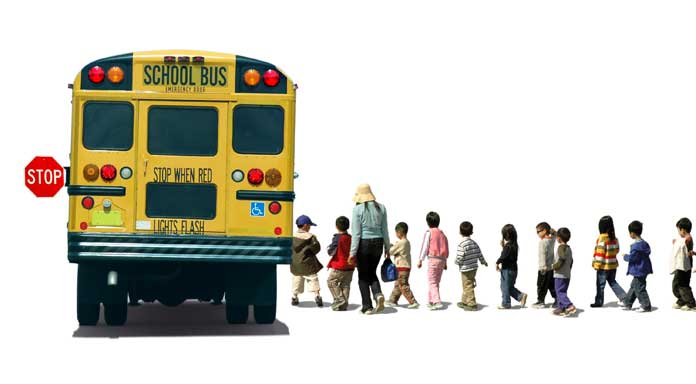
As I child, I loved field trips! It was always so much fun to ride the school bus to place that I had never been before. Many years later, I can still remember every field trip that I went on-the memories are that strong! You can probably think of a fun place that you visited too! Because field trips can be so powerful, we can promote them in many ways. Even, if schools do not take the children anywhere-fun “trips” can still happen. These days, many schools lack the funding to take children to even a museum or zoo. Some schools are overcoming this by having the field trip come to them. Here are some ideas of ones that I have experienced with my students:

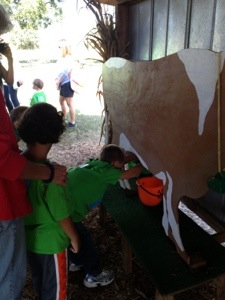
  • A Petting Zoo and Farmer visited and set up his mini-zoo outside of the school. The children were encouraged and allowed to hold the baby chicks, brush the hair of lambs and pick up the rabbits.
  • Colgate sent their Dentist in a mini-bus. Children were able to have the Dentist give them a quick check-up and then they each received a toothbrush and toothpaste.
  • Beach Day was an outdoor event that was set up outside of the school. Parent volunteers helped fill up kiddie pools, slip-n-slides, bubble tables and sprinklers. The kids wore their swimsuits and sunglasses. Afterwards, they sat on beach towels and had a snack.
  • Snow Day was also outside. The PTA raised money to rent a snow blowing truck. It simply made a l0x10 section of fake snow. The children wore their winter coats and mittens to school and were able to build snowmen in the snow.
  • Rodeo Day took place with ponies to ride, pretend cows to rope and line dancing in the gym. The children came to school dressed like cowboys and cowgirls.

Here are some other ideas:

  • Grocery Store visits can be arranged with a local grocer. One of the workers simply gives a tour of each section of the store and explains what types of healthy foods are available. Students can even sample fruit and veggies.
  • A Local Textile or Bottling Factory is another place where children can see how things are made.
  • Picking Berries or Local Veggies is a great way to show children in person, where things come from.
  • Having a X-Ray Technician bring real x-rays to school is a fun way for children to see what doctor’s really use.
  • Visit a Radio Station! Children can hear how the DJ speaks carefully and clearly. Maybe they can get a chance to be on the radio also!

Source: http://edis.ifas.ufl.edu/fr135

clipart via ripleys.com

20131228-020801.jpg

20131228-020904.jpg

Should Our Children “Work”?

Should children HAVE money?

As a mom I say “yes”, but under specific conditions. Merely giving children money for the sake of it is not a good idea. This is how the “money growing on trees” ideas get started. I say this, because I have done it before and now I regret just giving my kids money. If you are not interested in giving monetary rewards…keep reading…I have non-monetary prize suggestions, also!

Should children EARN money, then?

Again, I say “yes.” Why? Well, when it all comes down to it, parents DO provide for their children. They are the ones who buy them their clothing, food and entertainment. So, why not let them earn these things? Dave Ramsey also promotes the idea of requiring children to work for what they get. I agree to a point. Young children of course should not have to earn rent money to live at their own home and they most certainly should not earn money to buy their own basic clothing. Fancy clothing-yes! Extra shoes-sure! I am sure you are getting my point here. I think that a child should earn money to buy their own toys, tasty treats and other fun stuff that is not necessary to survive.

Earning Opportunities:

They can engage in simple household tasks, like:

  • Taking out the garbage
  • Putting away their laundry
  • Making their bed
  • Helping clear the table after meals
  • Helping put clean dishes away
  • Taking care of a pets needs: filling the water bowl, taking them for a walk

Children can also earn money for things that they already have to do, like:

  • Going to bed on time
  • Brushing their teeth before bedtime and before school
  • Packing up their backpack and getting things ready for school
  • Eating breakfast
  • Doing their homework

The above are tasks that have to be done anyway. They are tasks that mom usually does by herself and then she’s so exhausted and frustrated because no one is helping, right?!! So, by enlisting the rest of the family, everything that needs to get done, will get done and the kids will earn stuff they want, in the process.

What if I don’t want to give my child MONEY? What else can I give them?

  • Children can earn points. You can even keep track of their points on a new website called “Chore Monster” (it’s free!)
  • You can download a simple “chore chart” online and keep track of what they accomplish. When the chart is complete-they can earn a desired toy or prize.
  • Print out or buy tickets or coupons that they earn. After they have earned a certain amount, they can trade them in for a prize or sweet treat.

What does Research Say?

  • Research shows that children learn responsibility and independence by engaging in housework (and also homework).
  • When children earn money, they also learn about saving, giving to those less fortunate and spending their money wisely.
  • As children get older, they can learn about investing their money. As a result they can start saving up for a larger and more expensive item, like a video game, toy or even a new bicycle.
  • By earning money, as opposed to “being given money,” children will learn that hard work pays off!

What do you think? What has worked for you and your children? I would love to hear your ideas and suggestions!

Sources:

http://www.dailyfinance.com/2012/04/03/chores-allowance-teaching-kids-about-money/

http://www.daveramsey.com/article/top-3-kids-and-money-qa/lifeandmoney_kidsandmoney/

http://choremonster.com/

The Writing and Reading Connection

As an educator and Master teacher, I always knew that writing and reading were inter-connected. Actually there are so many things that us educators already “know.” Over the past decade, though, research proves that so many of the things that we already “knew” are actually true. Here is some research to back up the fact that by becoming a better writer, you will become better at reading.

1. Writing forces a child to focus on forming letters correctly.
2. When children are learning and practicing writing words, messages and stories, they are also learning to read those words in their own writing and in books.
3. Writing left to right instills that practice and knowledge of reading left to right.
4. As simple as it sounds – reading and writing mutually reinforce each other!
5. Paraphrasing things on paper, like vocabulary word definitions or what was just read, actually helps increase Reading Comprehension!
6. When a child sounds out words when he writes, he is actually developing phonemic awareness at the same time. Phonemic awareness is a pre-reading skill!

Sources:
http://sturgeonl.hubpages.com/hub/Teach-Children-Writing-to-Boost-Reading-Skills
http://www.eric.ed.gov/ERICWebPortal/search/detailmini.jsp?_nfpb=true&_&ERICExtSearch_SearchValue_0=ED278940&ERICExtSearch_SearchType_0=no&accno=ED278940
http://www.nwp.org/cs/public/print/resource/329

Bad Handwriting?


For the past 12 years of my teaching career, I have worked with many children who struggled with their handwriting. Some of them had existing disabilities, such as down’s syndrome, autism and speech impairments. Others did not. Fortunately, an Occupational Therapist visited my classroom often and worked with these children (between the ages of 4-6). I was able to witness and borrow many of her techniques.

Sloppy handwriting is hard to read, messy and is just not pretty to look at. It can be frustrating for the child because no one can read and understand what he is writing about. A parent becomes discouraged because she knows the potential of her child. A teacher may get irritated by “bad handwriting” because she can’t grade the child adequately.

Why are we so Worried?

To be honest, some educators are not, because of the increase in testing and influx of technology. However, good handwriting is important. There is actually evidence that indicates that children who write better and faster, get better grades. But don’t be fooled-superb handwriting is not an indicator of success. There are many intelligent and successful people who have horrible handwriting!

What Causes Good and Bad Writing?

  • Investigate to see if the problem is cognitive or physical. If a child can’t remember how to write a letter or shape or they take too long, then the problem is cognitive. If they have trouble forming the letter, then it is likely physical.
  • Be aware that a pre-requisite to good handwriting is developing the fine motor muscles in the hand, wrist and fingers.
  • If a child’s fine motor muscles have never been “worked out” or used often, then they will most likely struggle with holding a pencil or crayon correctly.
  • Holding a pencil correctly is another pre-requisite to good handwriting.
  • Some children’s problem may be from an existing or “not-yet diagnosed” disability. Having an evaluation from an Occupational Therapist is a good idea.

What Can I Do to Help?

  • Check that the child is holding the pencil correctly.
  • Be sure that when writing, the child’s feet are touching the floor and the table/desk is below chest level. He may need a shorter table or chair.
  • Check that his posture is tall and straight. Slouching and laying on the table does not help handwriting!
  • Be sure that his vision is not impeding his writing (Is it possible that he may need glasses?)
  • Encourage him to play with his food. That’s right! Here are some fun food activities: Pull grapes off the stems, cut strawberries, spread peanut butter on bread or help with mixing and stirring in the kitchen. These activities make the hands strong enough to write better!
  • You can also ask an OT yourself at: http://www.handwritinghelpforkids.com/expert.html
  • Encourage typing. That’s right. It builds up fine motor muscles, too!
  • Increase their physical activity through gross motor fun. Try these muscle developing activities: throwing a ball back and forth, playing “wheel-barrow,” crawling, climbing
  • Play outdoor games like baseball, tennis, jacks, marbles, clapping songs
  • Enforce the use of silverware at dinner time. Grasping a utensil increases fine motor strength.
  • Provide various writing tools like thin, short or fat markers and crayons, golf pencils, chalk, gel pens, paint brushes.
  • Bring out the play-dough and clay! This fun is disguised a muscle building.
  • Encourage your child to button and zip his own clothing and shoes.
  • Rake leaves and wash the car
  • Sort laundry
  • Write letters on the table with shaving cream or finger write on the shower door or wall
  • Encourage block play, snap cubes and snap beads as well as necklace beading.
  • Provide handwriting letter stamps for your child to stamp and then trace

The Benefits of Learning Another Language!

As an educator, I am asked all the time by parents “what can make my child smarter?” This is how I am going to answer this question from now on…have your child learn another language!

How does learning another language help a child “get smarter” you ask?  This is what recent research reveals about bilingualism and dual language learning.

Current Research about Learning Two Languages:

  • A child’s thinking and cognition is improved by learning another language.
  • Children who know two languages are better problem-solvers!
  • Their brain works differently.
  • Knowledge of a second language affects how you read in your native tongue-sometimes faster.
  • It alters grey matter – the area of the brain which processes information, just like exercising builds muscle.
  • It improves skills in the native language.
  • Regardless of race and socioeconomic status, children with dual languages, did better on standardized tests.
  • Higher creativity in story-telling occurs.
  • In terms of language-semantic development, they were ahead by 2-3 years.
  • It exercises the brain, as it is a cognitivly-challenging task.

 Old Myths about Dual language Learning:

(Keep in mind, these are beliefs that are not backed up by research. Some children did experience these obstacles, but some of those children also had prior learning/speech disorders in their native language)

  • It confuses children.
  • Learning another language takes brain power away from learning the native language.
  • The native language worsens as a result.
  • Test scores decrease.

Future Benefits of Knowing Two or more Language:

  • The opportunity for getting a better job, which requires bilingualism.
  • The chance to travel to other countries for that job!
  • Improved tolerance and awareness of other cultures.
  • Increases social skills with those of other culutures.

Isnt’ this all amazing! I am so excited to learn what this new research proves about bilingualism! I would love to hear your experiences with children learning two languages!

Sources:

http://www.scientificamerican.com/article.cfm?id=bilingual-brains

http://io9.com/5897308/immersion-in-a-foreign-language-rewires-your-brain-+-especially-when-you-take-time-off

http://news.bbc.co.uk/2/hi/health/3739690.stm

http://www.cerebralhacks.com/brain-exercises/the-effect-of-a-second-language-on-the-brain/